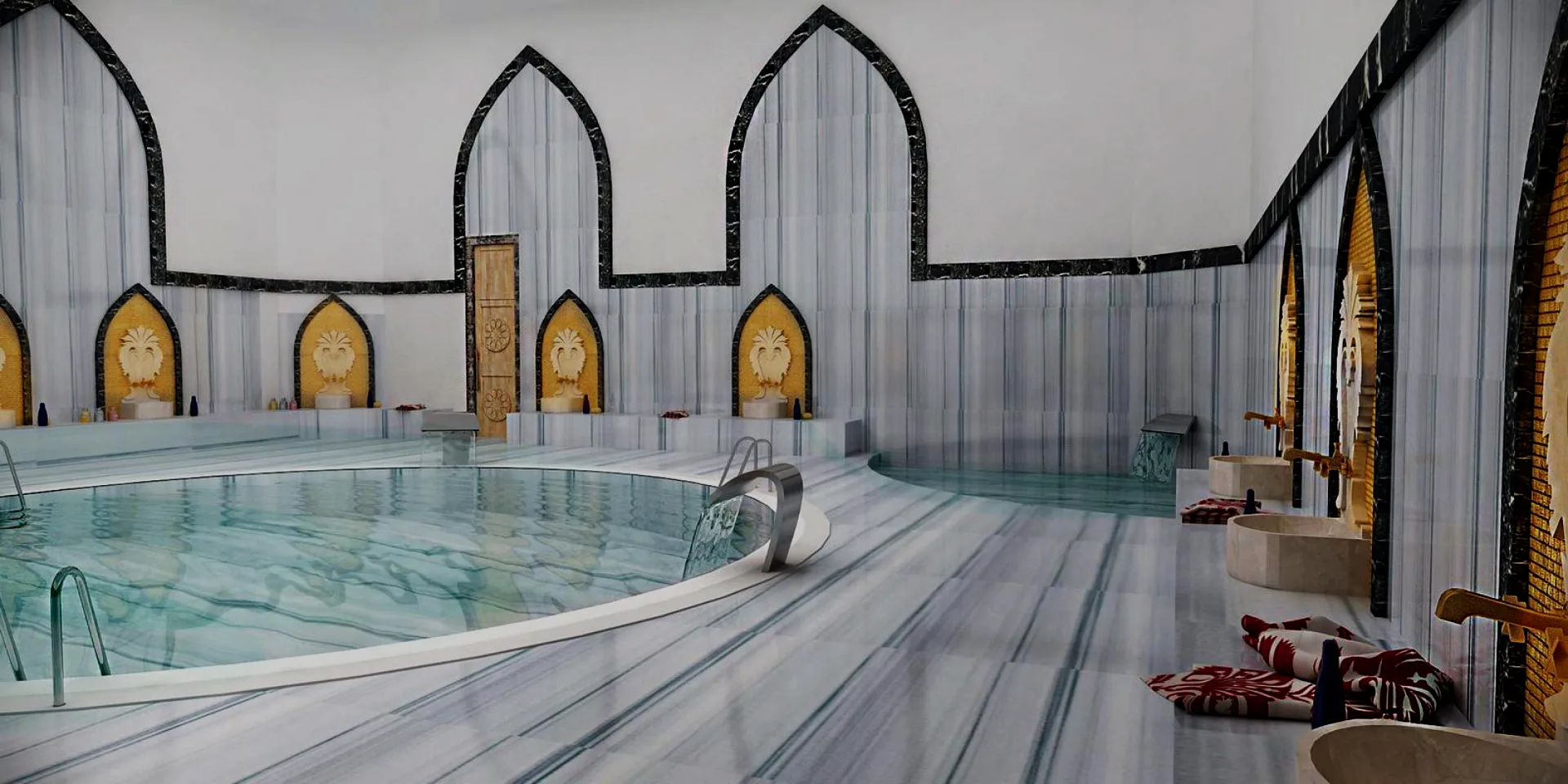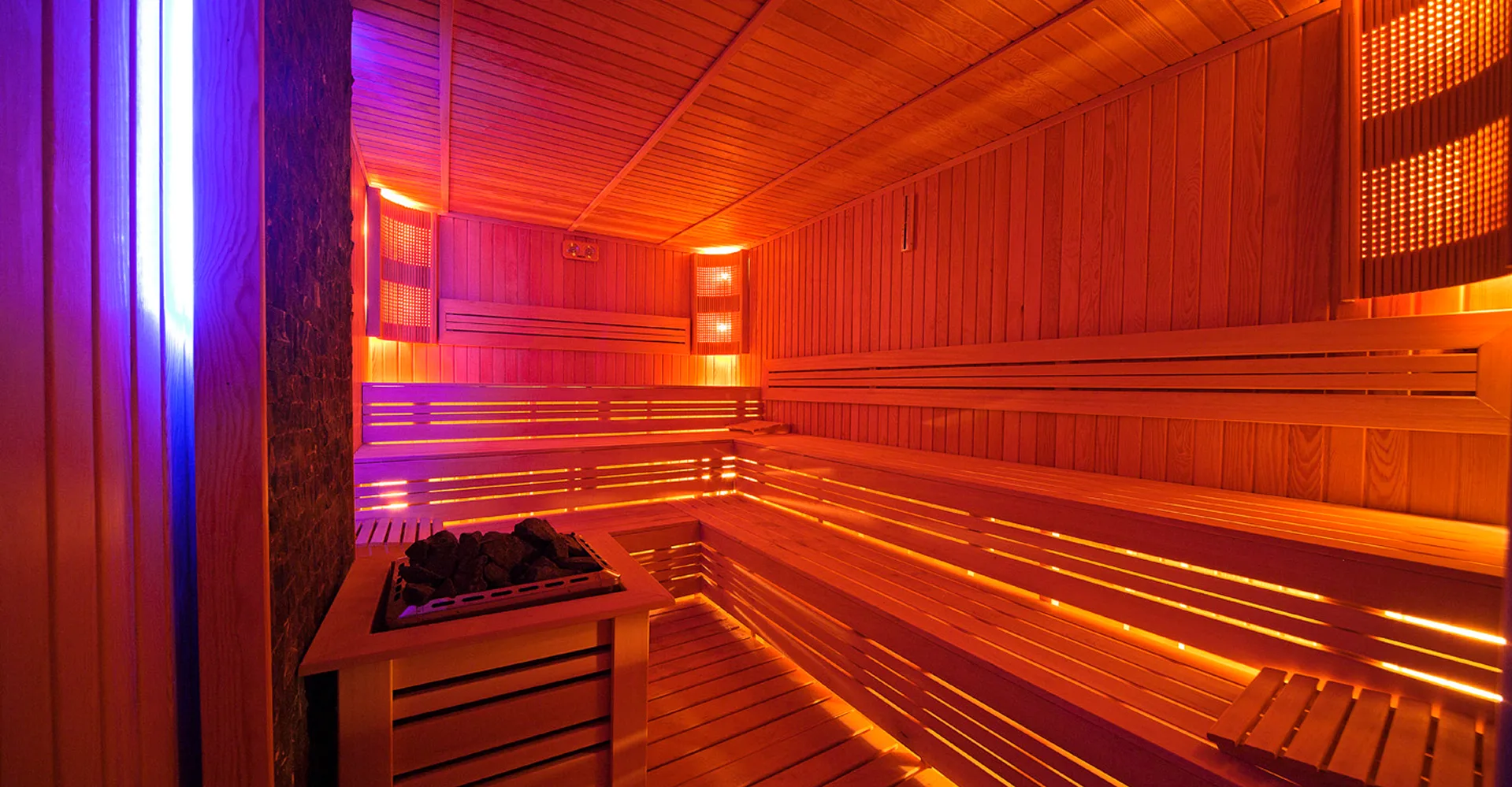
The main difference between a sauna and a steam room is how they provide heat and humidity. A traditional sauna uses higher temperatures with relatively low humidity. A steam room operates at lower temperatures in a much more humid environment. This affects everything from finishes to ventilation.
How do heat and humidity differ?
A sauna heater provides the heat. With suitable heaters, pouring water over the stones briefly increases humidity, so a sauna is not always completely dry.
A steam room uses a steam generator. The operating temperature and control settings depend on the selected system. A lower room temperature does not mean everyone can stay longer; session length should not be generalized on that basis.
Materials and room construction
In a sauna, suitable timber is commonly used for benches and internal wall finishes. Floors, the area around the heater and other surfaces have their own design and safety requirements. Not every surface needs the same material.
In a steam room, finishes and the layers beneath them need to suit high humidity. Seating may be tiled or formed from purpose-made components. Finishes, grout and waterproofing should be assessed together.
How do the services differ?
For a sauna, heater capacity and safe positioning are key decisions. For a steam room, generator capacity, service access and pipe connections need early attention. Equipment sizing should follow the manufacturer’s method, accounting for room volume and surfaces.
A steam generator needs an accessible service location, with water supply and drainage planned from the start. Harvia’s steam room installation guide gives examples of manufacturer-specific requirements for generator placement and connections.
Ventilation is part of the design in both rooms. Inlet and outlet positions can vary with the heater and ventilation method. Harvia’s sauna ventilation guidance illustrates how natural and mechanical ventilation can require different layouts.
Which suits your project?
Consider three questions:
- Preferences: Do users want relatively dry heat or a humid, steamy environment?
- Existing space: What can the electrical supply, water connections, drainage, ventilation and service area accommodate?
- Operation: How long will the room run, who will clean it and who will maintain it?
Do not assume that a sauna is always easier or cheaper to fit into a small space. Ask for a layout and quote for each option, showing seating and equipment clearances, so that you can compare them fairly.
How does maintenance differ?
Sauna care includes cleaning and drying timber surfaces and checking the heater and any stones. Steam room care includes wet surfaces, drains and the generator. In both cases, use the maintenance instructions for the installed products.
If you are also considering a Turkish hammam, see our hammam planning guide. To discuss a sauna or steam room for your space, contact Berrak Havuz.
Frequently Asked Questions
Can a sauna and steam room share the same room?
Some products offer different operating modes, but adding a steam generator does not turn a standard sauna into a steam room. The manufacturer must confirm that the room structure and equipment are suitable for combined use.
Which requires less maintenance?
The workload depends on operating hours, materials, water quality and equipment. Sauna timber and heaters need different care from steam room surfaces, drainage and generators.
Which is better for a small space?
Floor area alone is not enough to decide. Consider seating, door movement, equipment clearances and existing services. A layout based on the manufacturers' dimensions makes the options easier to compare.